09/06/2015 · flexibility and sensitivity, since both direct and indirect detection methods can be used. In this test, antibody is first incubated in solution with a sample containing antigen. 22/09/2021 · the indirect elisa requires two antibodies—a primary antibody to bind to the antigen, and a secondary antibody conjugated to an enzyme or fluorophore. This makes the direct elisa disadvantageous compared to the indirect test. The direct elisa uses a primary antibody that is directly conjugated to an enzyme or fluorophore.
Direct And Indirect Elisa Test Free Download
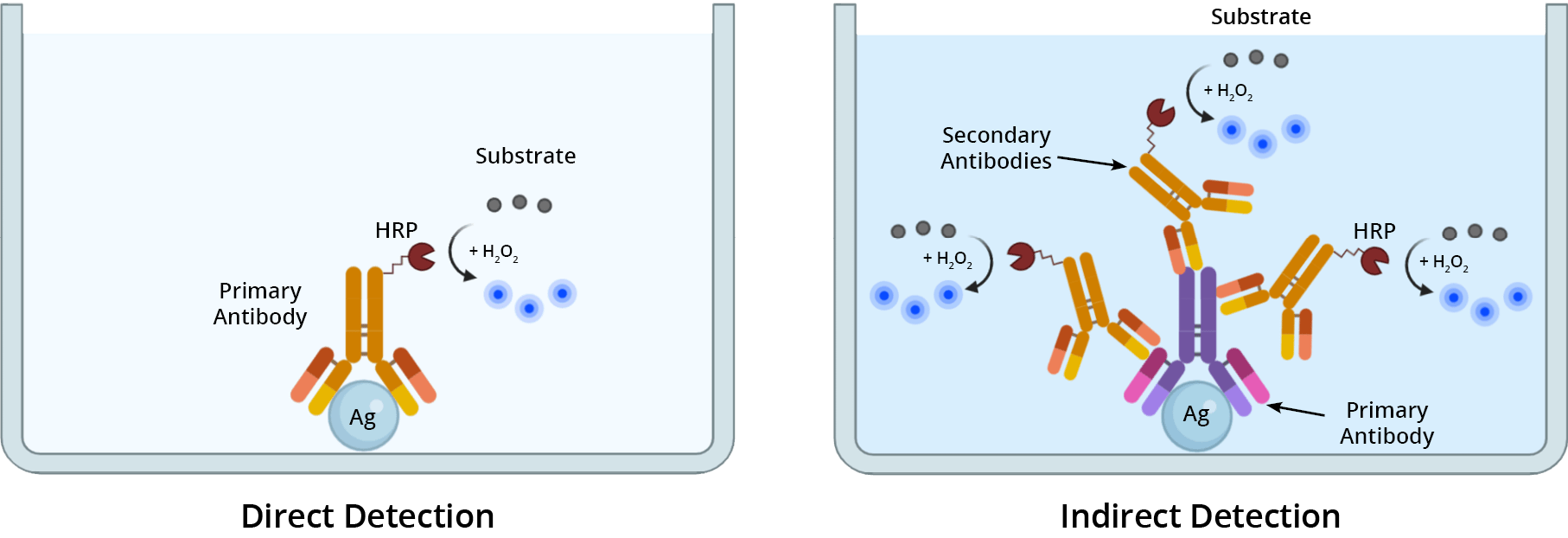
No signal amplification, since only a primary antibody is used and a secondary antibody is not needed. 09/06/2015 · flexibility and sensitivity, since both direct and indirect detection methods can be used. This makes the direct elisa disadvantageous compared to the indirect test. 18/09/2018 · the main difference between direct and indirect elisa is that in direct elisa, the primary antibody is directly conjugated to the detection enzyme whereas, in indirect elisa, a secondary antibody which is complementary to the primary antibody is conjugated with the detection enzyme. 22/09/2021 · the indirect elisa requires two antibodies—a primary antibody to bind to the antigen, and a secondary antibody conjugated to an enzyme or fluorophore. The direct elisa uses a primary antibody that is directly conjugated to an enzyme or fluorophore. First, an unlabeled primary antibody binds. Low flexibility, since the primary antibody must be labeled. This test is used to measure the concentration of an antigen in a sample. This means direct elisa uses a single antibody while indirect. In this test, antibody is first incubated in solution with a sample containing antigen. The antigen is then detected by an antibody directly conjugated to an enzyme, such as hrp. The direct elisa test is rapid compared to the indirect test, since it uses only a single antibody.
In the direct elisa, the primary antibodies have to be specifically prepared to react with the specific antigen that are present in the sample. This means direct elisa uses a single antibody while indirect. 22/09/2021 · the indirect elisa requires two antibodies—a primary antibody to bind to the antigen, and a secondary antibody conjugated to an enzyme or fluorophore. Either way, both of these methods—and indeed every elisa protocol, is a labeled assay. 18/09/2018 · the main difference between direct and indirect elisa is that in direct elisa, the primary antibody is directly conjugated to the detection enzyme whereas, in indirect elisa, a secondary antibody which is complementary to the primary antibody is conjugated with the detection enzyme.

Direct And Indirect Elisa Test Free Download
First, an unlabeled primary antibody binds. No signal amplification, since only a primary antibody is used and a secondary antibody is not needed. 22/09/2021 · the indirect elisa requires two antibodies—a primary antibody to bind to the antigen, and a secondary antibody conjugated to an enzyme or fluorophore. 09/06/2015 · flexibility and sensitivity, since both direct and indirect detection methods can be used. The direct elisa uses a primary antibody that is directly conjugated to an enzyme or fluorophore. Either way, both of these methods—and indeed every elisa protocol, is a labeled assay. This test is used to measure the concentration of an antigen in a sample. The direct elisa test is rapid compared to the indirect test, since it uses only a single antibody. In the direct elisa, the primary antibodies have to be specifically prepared to react with the specific antigen that are present in the sample. 18/09/2018 · the main difference between direct and indirect elisa is that in direct elisa, the primary antibody is directly conjugated to the detection enzyme whereas, in indirect elisa, a secondary antibody which is complementary to the primary antibody is conjugated with the detection enzyme. In this test, antibody is first incubated in solution with a sample containing antigen. Low flexibility, since the primary antibody must be labeled. The antigen is then detected by an antibody directly conjugated to an enzyme, such as hrp.
Either way, both of these methods—and indeed every elisa protocol, is a labeled assay. First, an unlabeled primary antibody binds. In this test, antibody is first incubated in solution with a sample containing antigen. The direct elisa uses a primary antibody that is directly conjugated to an enzyme or fluorophore. This makes the direct elisa disadvantageous compared to the indirect test.

Direct And Indirect Elisa Test Free Download
The direct elisa test is rapid compared to the indirect test, since it uses only a single antibody. This makes the direct elisa disadvantageous compared to the indirect test. Low flexibility, since the primary antibody must be labeled. In this test, antibody is first incubated in solution with a sample containing antigen. 18/09/2018 · the main difference between direct and indirect elisa is that in direct elisa, the primary antibody is directly conjugated to the detection enzyme whereas, in indirect elisa, a secondary antibody which is complementary to the primary antibody is conjugated with the detection enzyme. No signal amplification, since only a primary antibody is used and a secondary antibody is not needed. First, an unlabeled primary antibody binds. In the direct elisa, the primary antibodies have to be specifically prepared to react with the specific antigen that are present in the sample. Either way, both of these methods—and indeed every elisa protocol, is a labeled assay. 22/09/2021 · the indirect elisa requires two antibodies—a primary antibody to bind to the antigen, and a secondary antibody conjugated to an enzyme or fluorophore. This means direct elisa uses a single antibody while indirect. The antigen is then detected by an antibody directly conjugated to an enzyme, such as hrp. 09/06/2015 · flexibility and sensitivity, since both direct and indirect detection methods can be used.
Direct And Indirect Elisa Test. 18/09/2018 · the main difference between direct and indirect elisa is that in direct elisa, the primary antibody is directly conjugated to the detection enzyme whereas, in indirect elisa, a secondary antibody which is complementary to the primary antibody is conjugated with the detection enzyme. This makes the direct elisa disadvantageous compared to the indirect test. This means direct elisa uses a single antibody while indirect. The antigen is then detected by an antibody directly conjugated to an enzyme, such as hrp. Low flexibility, since the primary antibody must be labeled.